Managing credentials↑
You can follow the steps in the following demo video or follow the the instructions in the following sections to use the various CAEPE features.
This guide shows you how to manage credentials from the CAEPE account portal. You can access the configuration section from the Configuration -> Credentials menu item.
Info
A Credential represents the user account and token details needed to access private repositories and servers.
Viewing credentials↑
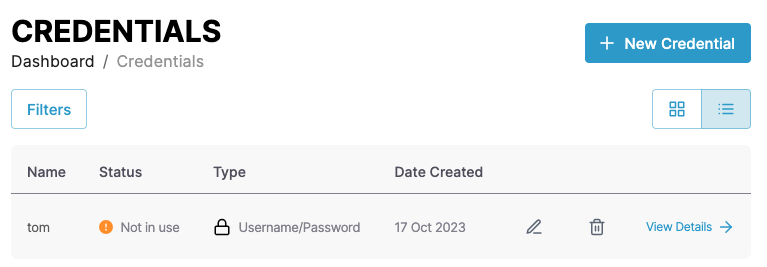
You can see the credentials associated with your account in the center of the page.
You can switch the view of the credentials between a "list" and "grid" view and filter the credentials by clicking the Filters button. You can filter by credential name, status, and type.
Each entry in the list or grid shows the credential's name, whether it is In use or Not in use, its type, and the date it was created. Click the pencil icon to edit the credential or the wastebasket icon to delete it.
Credential details↑
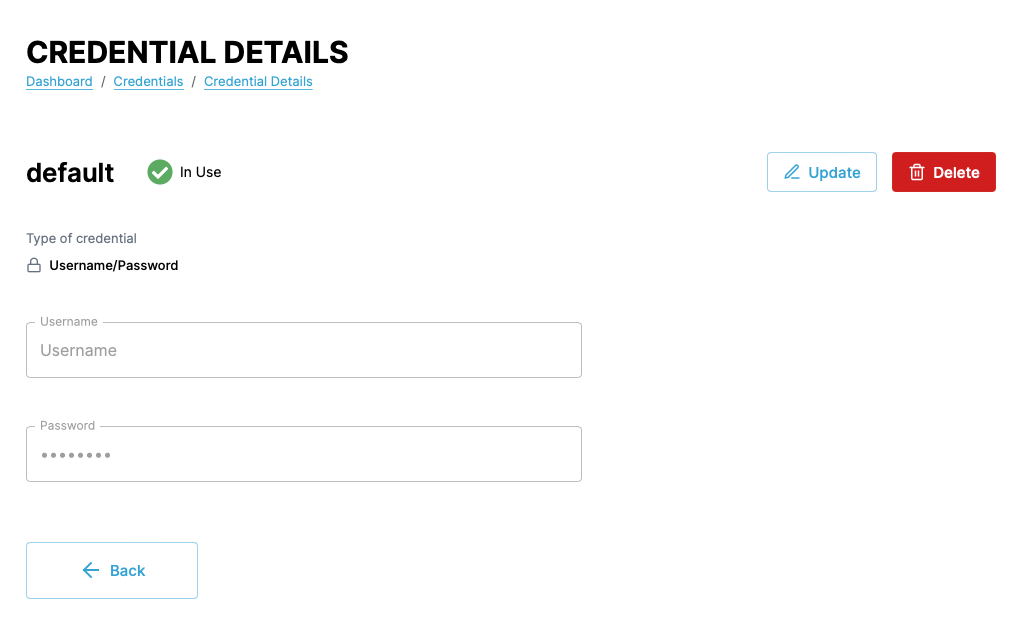
Click the View Details link next to any credential to see more details about the credential including the type, the username and password or name and key, and any repository using the credential. You can also edit and delete the credential from the details page.
Add credentials↑
Create a credential by clicking the New Credential button.
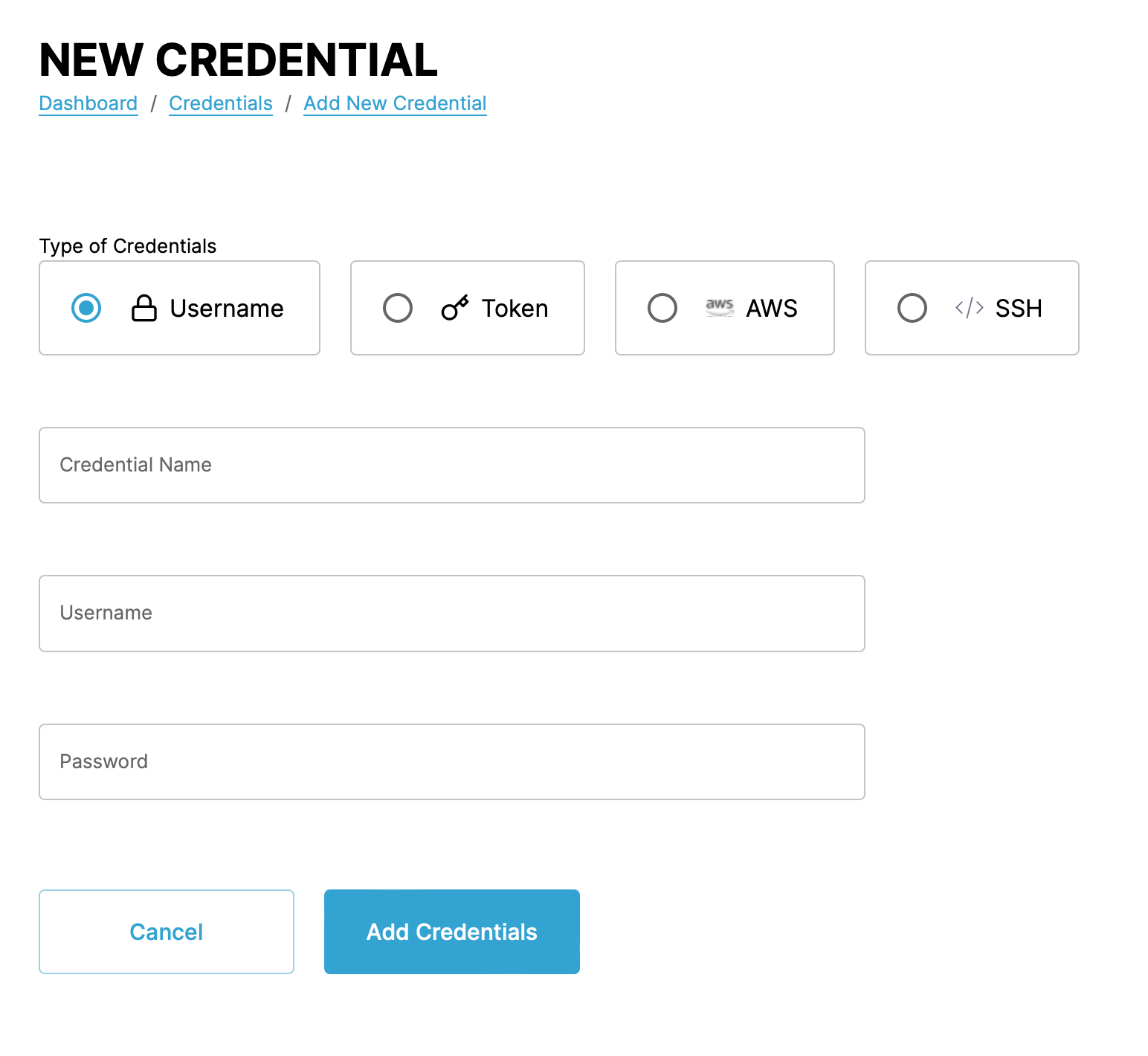
In the form that appears, select the type of credential, then set a name and the details for the credential. The details depend on the type you select:
| Type | Use it for | Details |
|---|---|---|
| Username | A username and password combination, for example for a Git repository or image registry. | Username, Password |
| Token | A token for authentication, such as an OAuth or personal access token. | Token |
| AWS | Accessing AWS ECR. | Region, Access Key, Secret Key, Account ID |
| SSH | Running scripts on an SSH target, such as test scripts and cluster build playbooks. | SSH type (Interactive or Non-interactive). Interactive: Username, Password. Non-interactive: Username, Private Key. |
| OpenAI API key | Day-2 Ops recommendations and AI Remediation. | API Key, Base URL, Model |
| Private key | Authenticating Git repositories. | Private Key (SSH private key in PEM format) |
Info
Changing SSH credential types requires creating a new credential. After creating an SSH credential as either interactive or non-interactive, you can edit the username and password but not change its type. To switch between interactive and non-interactive, create a new credential with the desired type, update any repositories or image registries using the old credentials to the newly created credential, then delete the old credential.