Managing schedules↑
You can follow the steps in the following demo video or follow the the instructions in the following sections to use the various CAEPE features.
This guide shows you how to manage schedules from the CAEPE account portal. You can access the configuration section from the Configuration -> Schedules menu item.
Info
Schedules control when deployments happen. A schedule can deploy an application on a recurring basis, block deployments during a set time, or scale deployments to zero outside working hours.
Viewing schedules↑
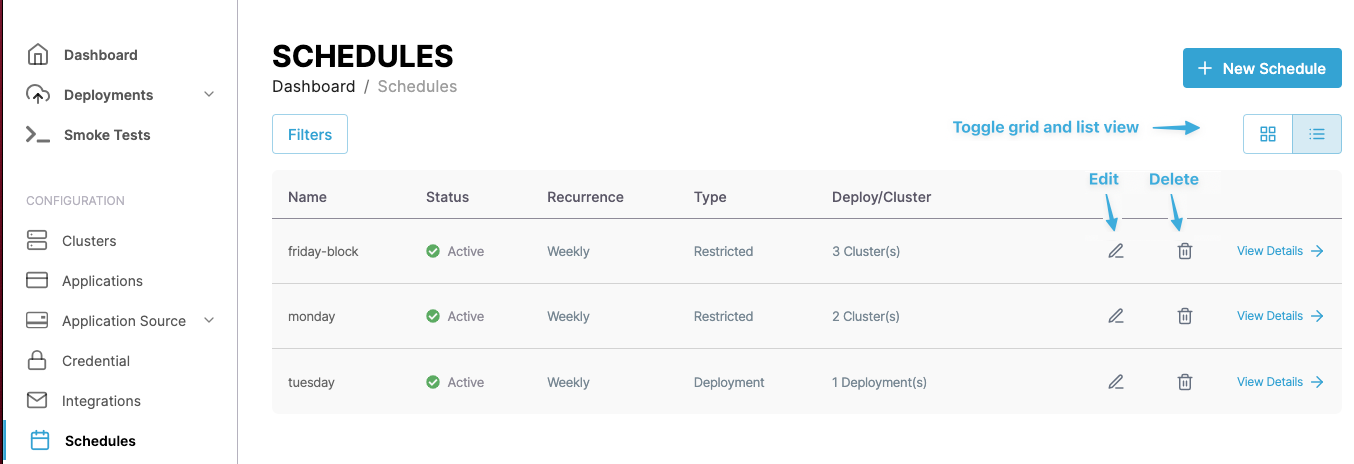
You can see the schedules associated with your account in the center of the page.
You can switch the view of the schedules between a "list" and "grid" view and filter the schedules by clicking the Filters button. You can filter by schedule name, status, and type.
Each entry in the list or grid shows the schedule's name, status, recurrence, type (Deployment, Restricted, or Sustainability), and the number of deployments or clusters it applies to. Click the pencil icon to edit the schedule and the wastebasket icon to delete it.
Schedule details↑
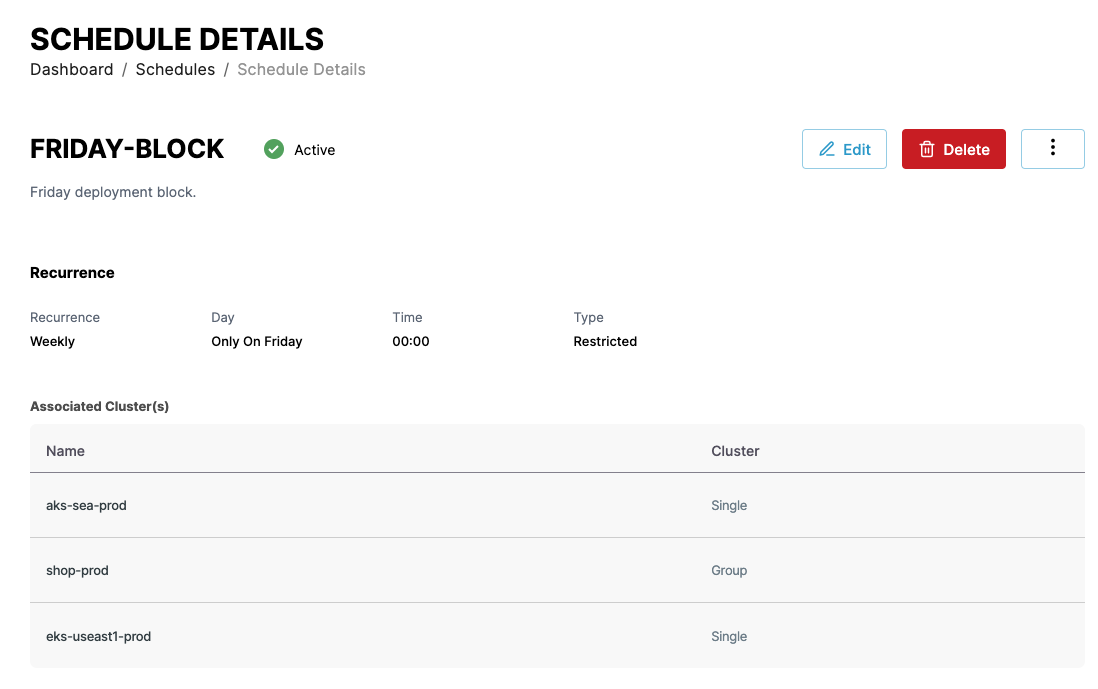
Click the View Details link next to any schedule to see more details about the schedule including the type, the credentials used, and any applications using the schedule. You can also edit and delete the schedule from the details page.
Create a schedule↑
Create a schedule by clicking the New Schedule button. CAEPE has three types of schedule:
- Deployment: For deploying an application to a deployment.
- Restricted: For blocking an application deployment to a deployment.
- Sustainability: For scaling deployments to zero outside working hours to cut cost and energy use. See Sustainability.
Deployment↑
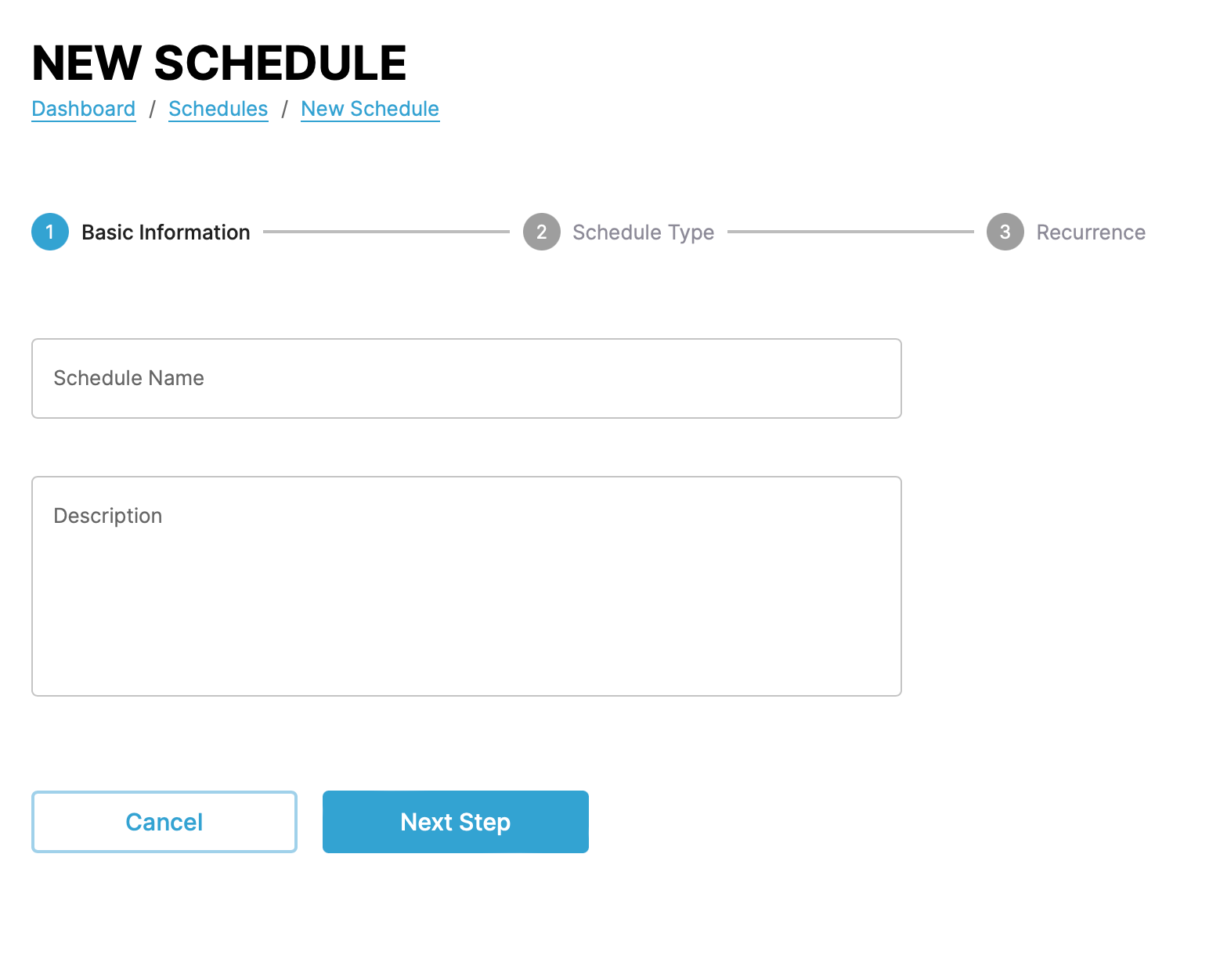
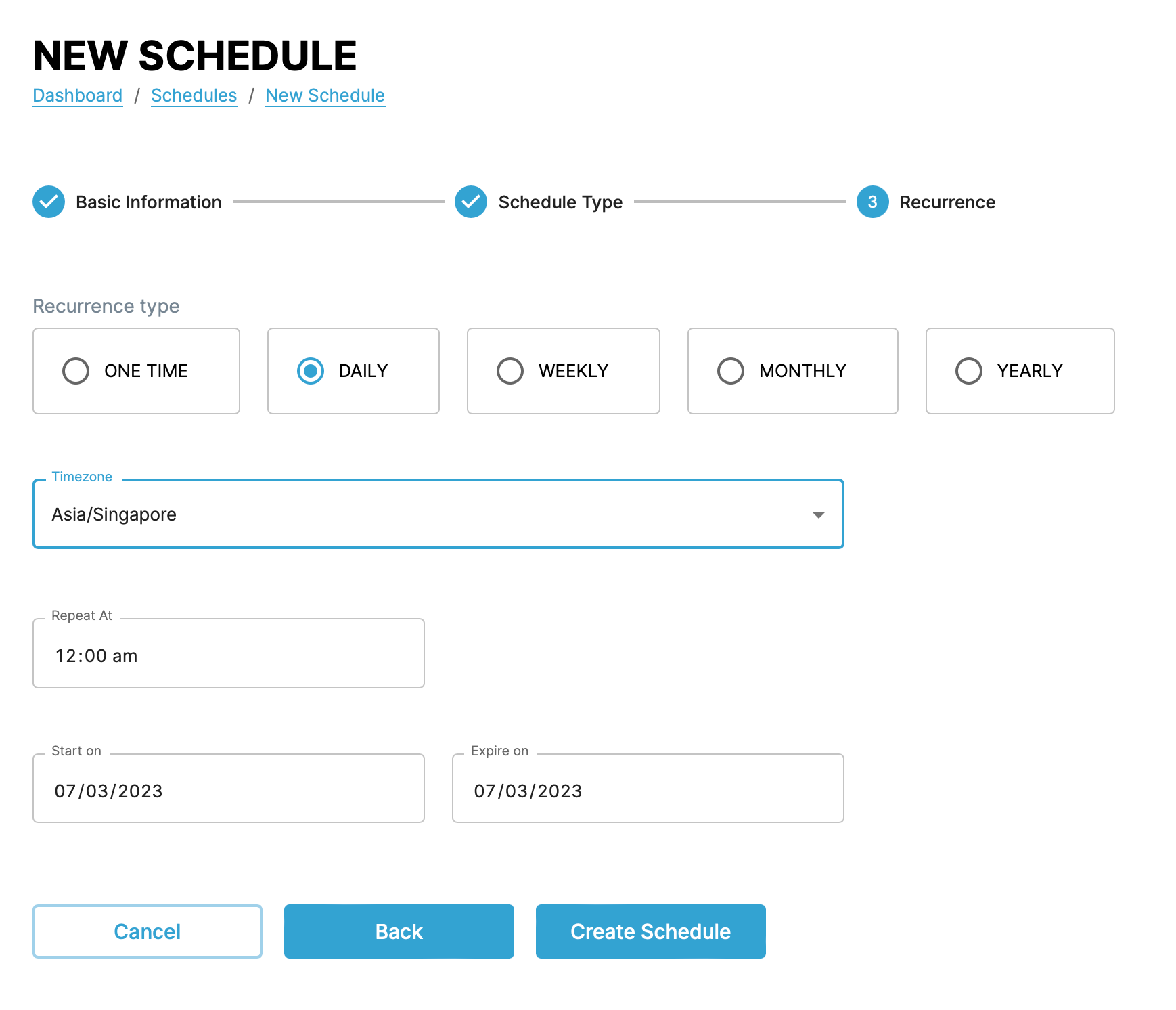
In the first step, give the schedule a name and a description.
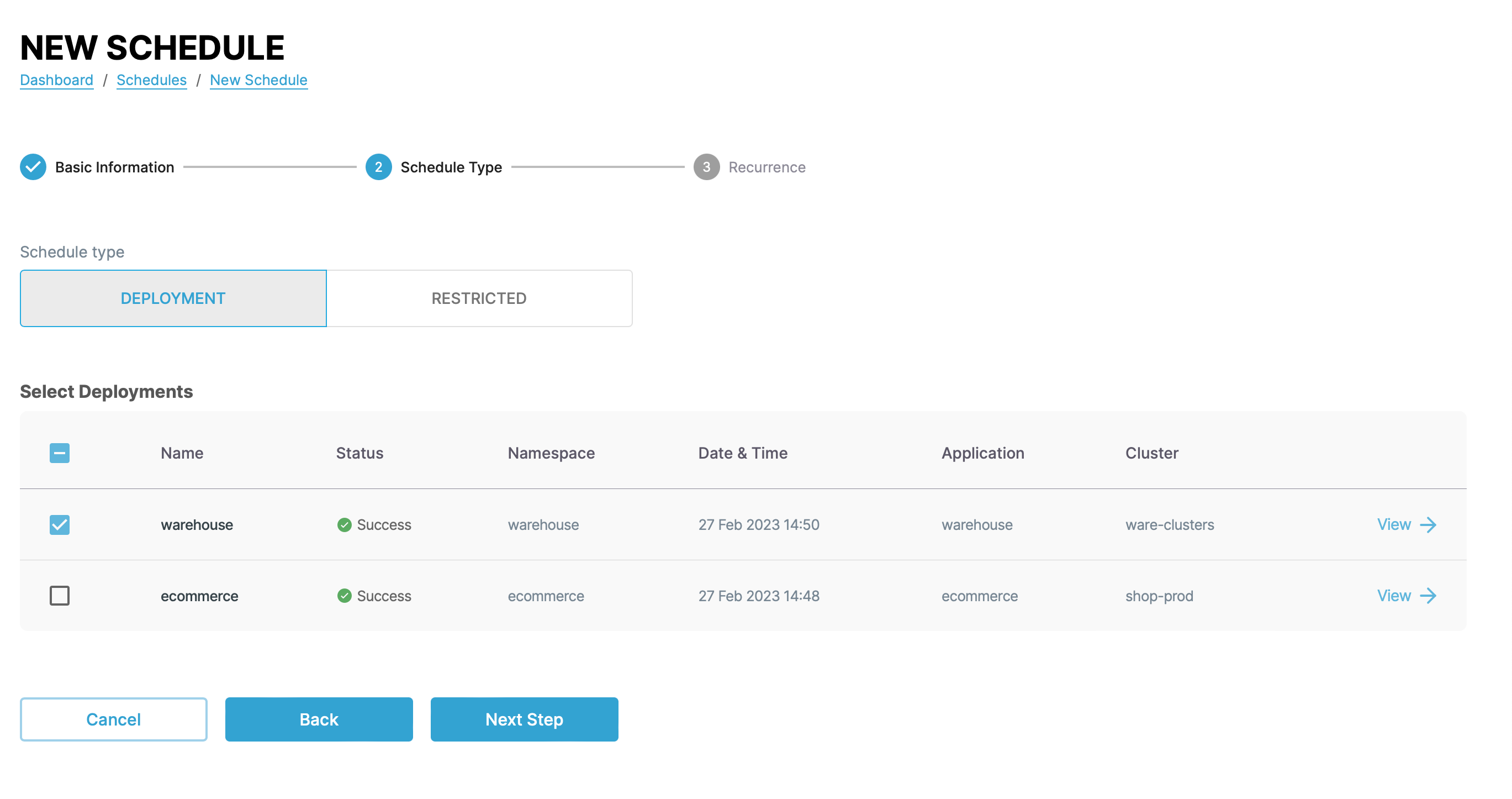
In the next step, select the schedule type and the deployments to include in the schedule.
In the final step, set the schedule for the deployment.
Restricted↑
In the first step, give the schedule a name and a description.
In the next step, select Restricted as the schedule type, then select the cluster to restrict deployments to.
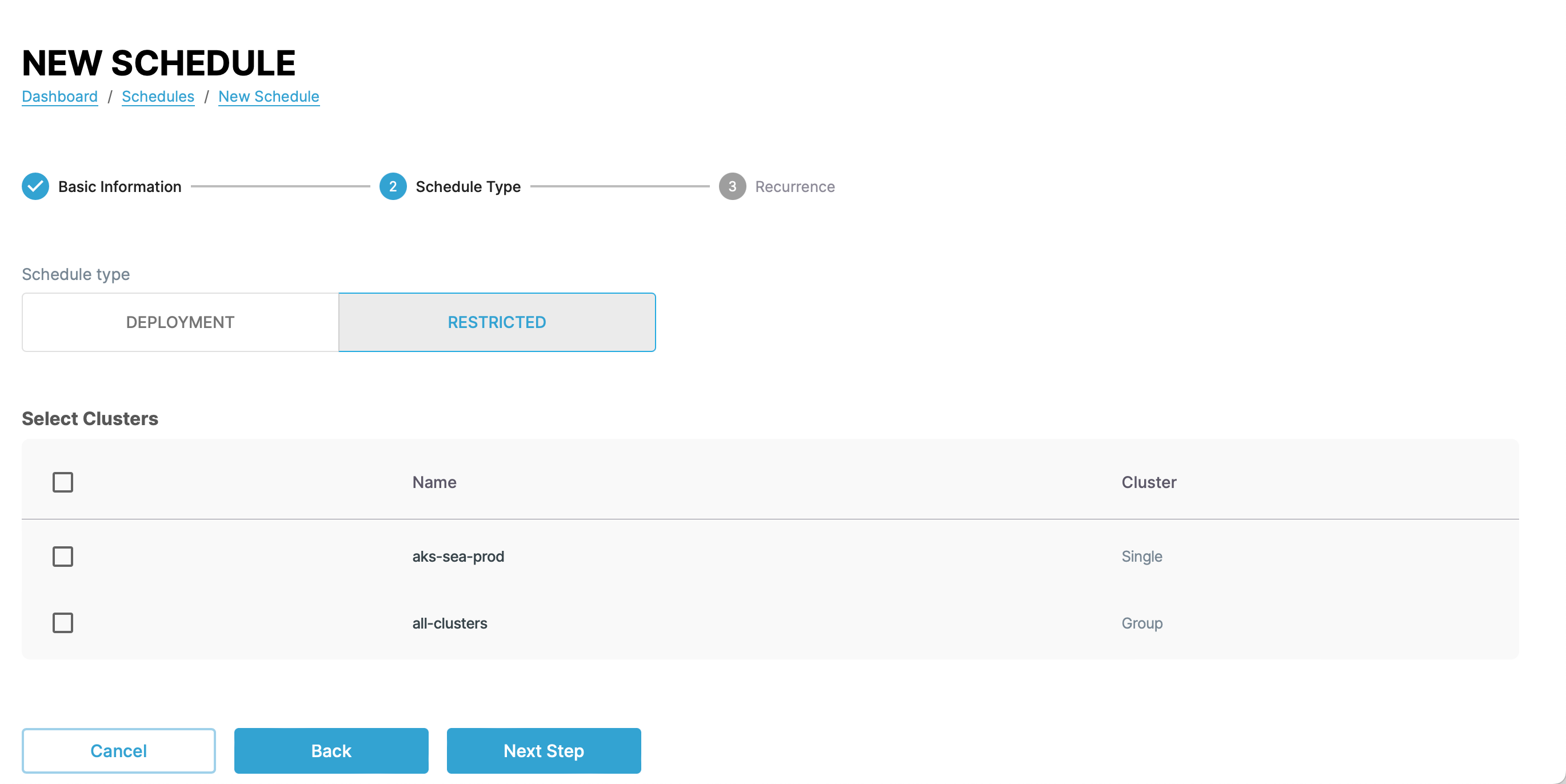
In the final step, set the schedule for the restriction.
Sustainability↑
A sustainability schedule scales its deployments to zero at a set time and starts them again later. Nothing is deleted. You can track the savings in Sustainability Schedules.
-
In the Basic Information step, enter a Schedule Name and a Description. Both are required. Then select Next.
-
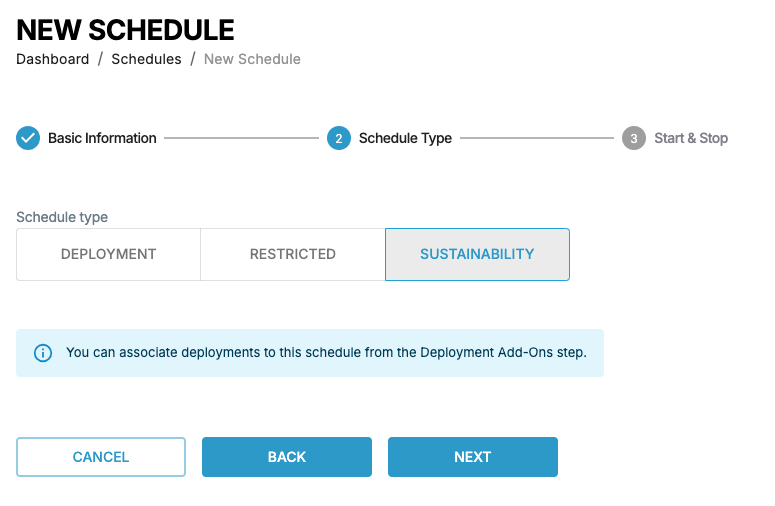
In the Schedule Type step, select Sustainability, then select Next.
You don't choose deployments in this step. Instead, you add deployments to the schedule from the Add-Ons step when you create a deployment. See Add a deployment to a sustainability schedule.
-
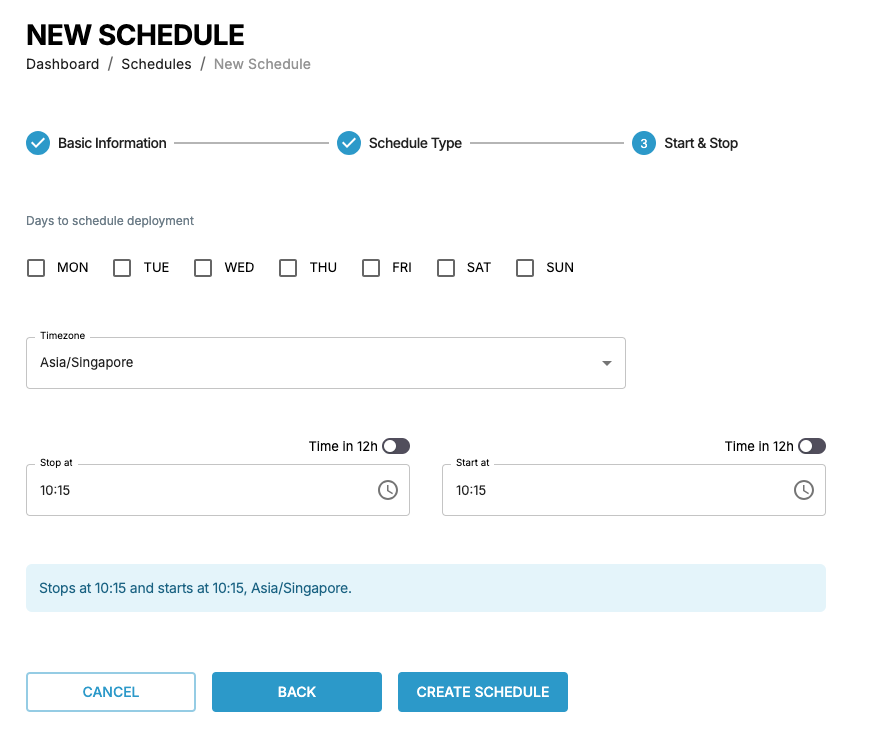
In the Start & Stop step, set when the deployments sleep:
- Days to schedule deployment: select the days the schedule applies to, from MON to SUN.
- Timezone: select the time zone for the times below.
- Stop at: the time to scale the deployments to zero.
- Start at: the time to start the deployments again.
Turn on Time in 12h to enter a time in 12-hour format. A summary below the times confirms the schedule, for example Stops at 19:00 and starts at 08:00, Asia/Singapore.
-
Select Create Schedule.
Add a deployment to a sustainability schedule↑
- Create a standard deployment from Deployments > New Deployment and complete the steps until you reach Add-Ons. See Standard deployments. The Sustainability Schedule add-on is available for standard deployments only.
- In Add-Ons, turn on Sustainability Schedule.
- In Select the Schedule, select the sustainability schedule. Only sustainability schedules are listed. To create one without leaving the page, select New Schedule.
- Select Create Deployment.